
Catch Your Balance
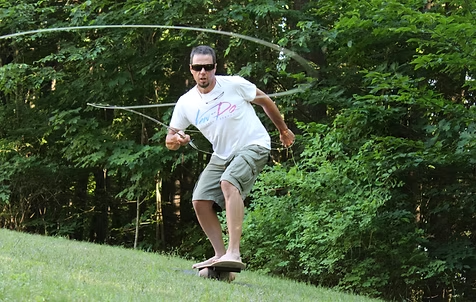
Because fly casting in moving water isn't difficult enough!
One of the things that consistently stands out to me as I look to my 40th year on the Battenkill is how often people underestimate the role balance plays in fly fishing, especially in real rivers, on real rocks, under real conditions.
Most folks spend their workweek seated behind a desk, in a car, or on a couch. Then, on the weekend, they step into a cold, fast-moving river and expect their body to suddenly perform like a mountain goat on wet, moss-coated stones. Sometimes it works. Often, it doesn’t.
Balance is not a switch you flip. It’s a skill you cultivate.
I’ve been “balance training” for over 35 years through snowboarding, balance board training, hiking and being outdoors in environments that punish hesitation and reward awareness. And even after all that time, I still find balance challenging, which is exactly why I respect it. That challenge is part of the experience. It keeps me sharp; keeps me present.
In all those years, I’ve only fallen into the river three times. Two of those were on the same day, right after I got my first set of progressive eyeglasses—so in my book, they don’t count. The third was the classic no-warning sloped rock that looks innocent until it isn’t. If you fish long enough, you’ll meet that rock.
But what surprises me even now is not that I occasionally lose footing, it’s how quickly I can recover when things go unstable underfoot. That recovery comes from repetition, from training.
And that’s the real message here: train your balance—especially as you age.
Strength matters. Endurance matters. But balance ties it all together. If you hesitate or become tense, you may be going for a swim. Confidence, stability, and relaxation will keep you warm, dry, and injury-free. Wading a river is not walking on a sidewalk. It’s dynamic. The bottom moves. The water pushes. Your vision refracts. Every step is a negotiation between gravity, current, and awareness.
The river doesn’t care how confident you feel stepping in. It only responds to how prepared you are.
So if you want to fish better, fish longer, and fish safer—train. Get off flat ground. Stand on one foot. Use balance boards. Hike uneven trails. Snowboard. Skate. Do yoga. Practice being unstable in controlled environments so you’re not surprised by it in uncontrolled ones.
The river will always challenge you. That’s part of the deal. The question is: are you training to meet that challenge?